

Date
November 3, 2025
Category
Diversification
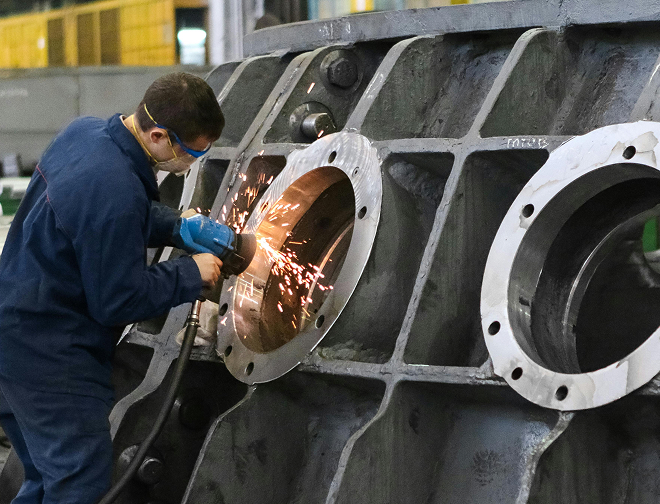
For manufacturers entering defense or new industries, clarity beats complexity every time.
Growth in advanced manufacturing often means stepping into new territory—new markets, new buyers, and new expectations. Many small and mid-sized manufacturers are exploring dual-use opportunities, where a single technology can serve both defense and commercial sectors. The upside is tremendous, but the complexity is just as real.
If your market positioning and value narrative aren’t clear before you scale, you’ll spend more time managing confusion than capturing contracts. In defense and commercial markets alike, the manufacturers that win are the ones that communicate value with consistency and precision.
For most manufacturers, chaos begins in the story they tell (or in some cases, the story they don’t tell).
Defense and commercial buyers think differently, buy differently, and define “value” differently. Defense buyers look for certifications, compliance, past performance, and reliability. They want proof that you can deliver under regulation and scrutiny. Commercial buyers prioritize speed, adaptability, and ROI. They want proof that you can innovate and respond quickly to market needs.
If you use the same story for both, you dilute your credibility with each set of buyers. The confusion multiplies across your website, proposals, trade shows, and even sales conversations. Before long, your teams are saying different things, your marketing materials are inconsistent, and your buyers start second-guessing what you actually do.
The truth: you can’t scale what you can’t clearly position.
Before expanding into new markets, you need to establish your market positioning. That means defining who you are, what you deliver, and why it matters to that customer, then shaping that into distinct value narratives for each audience.
You’re selling the same technology, but the “why” behind the buy is entirely different.
For example:
This convergence between defense and commercial expectations makes clarity even more critical. You’re not just competing on innovation—you’re competing on how well you communicate readiness and relevance. If your positioning doesn’t account for both paths, growth won’t feel like an opportunity; It’ll feel like chaos.
Many manufacturers treat marketing as a checklist of actions: build a website, attend trade shows, launch a LinkedIn campaign. However, before those tactics can be effective, you need a strategic foundation, a positioning plan that aligns your technology, audience, and message.
Start with questions like:
This is also a good time to run a communications audit. Pull all your materials, sales decks, capability statements, presentations, and web content into a single location. What’s consistent? What’s outdated? What needs translation between markets?
Alignment isn’t about creativity; it’s about operational control. Growth without alignment is like building an assembly line without a schematic. You can keep adding machines, but the output won’t be consistent or scalable.
In manufacturing, process and precision are key factors in determining success. The same is true in how you tell your story.
Your market positioning is the operating system that guides how your company presents itself, earns trust, and converts opportunities. Your value narrative translates engineering expertise into business relevance. Together, they ensure that buyers, both government and commercial, see your company the way you intend them to.
Advanced manufacturers thrive when their positioning is as strong as their technology. Get that right, and scaling isn’t chaos—it’s coordination.
At Anthology Communications, we help advanced manufacturers define their market position, shape their value narrative, and build communication systems that scale across defense and commercial sectors. If you’re ready to align before you expand, let’s talk.
1. Your team can’t describe what you do in one sentence.
If your engineers, salespeople, and executives each give a different answer to “What does your company do?”, that’s a clarity issue, not a communication one.
2. Your materials talk about features, not outcomes.
Buyers care less about how it works and more about how it solves their problem. If your pitch reads like a spec sheet, you’re losing attention.
3. Your digital presence doesn’t reflect your capabilities.
Before buyers call, they search. If your website, case studies, or LinkedIn content don’t convey the scale, certifications, or innovation you actually offer, your credibility takes a hit.
Possible Table inclusion here or with LinkedIn or for another blog
